Getting care here, step by step.
Who qualifies, in dollars. What to bring. The application, in English or Spanish, in five minutes. What a first visit looks like. Nothing on this page asks about your health; that is for the room, with a person.
Three things, and you are in
Your household income is under the line
The line is in dollars, by how many people live on the income. It is the table below; the calculator under it reads the same table.
You have no health insurance
And you are not eligible for Medicaid or Medicare. Not sure? The patient navigator checks with you on the phone; being turned down for Medicaid is fine, so is being between jobs.
You live in Sawmill County
Anything with your address on it will do. If you are staying with someone, say so; that counts.
The income line
| People in the household | Income under, a month | Income under, a year |
|---|---|---|
| 1 person | $2,660 | $31,920 |
| 2 people | $3,607 | $43,280 |
| 3 people | $4,553 | $54,640 |
| 4 people | $5,500 | $66,000 |
Sample thresholds, set from the 2026 federal poverty guidelines. A real clinic sets its own line from the current guidelines it uses — the HHS poverty guidelines page. More than four people: call, the line goes up with each person.
Am I likely under the line?
Nothing you type here leaves this page. It is the table on the left, read for you.
Under the line means likely eligible, not certain: the navigator confirms it on the phone. Over the line means call anyway — the line moves when the household changes, and some costs are taken into account.
What to bring
Every medication you take
The bottles themselves, or a photo of the labels. Vitamins and anything over the counter too. The pharmacist checks them against what the clinician prescribes.
Something with your address
A bill, a letter, a lease. If you are staying with someone, a note from them is enough.
An idea of your household income
A pay stub if you have one; if you do not, your word is what the navigator writes down. Nobody is asked to prove it.
Not needed
No ID from any government, no Social Security number, no proof of anything about immigration. The clinic does not ask and does not keep it.
About an hour, in this order
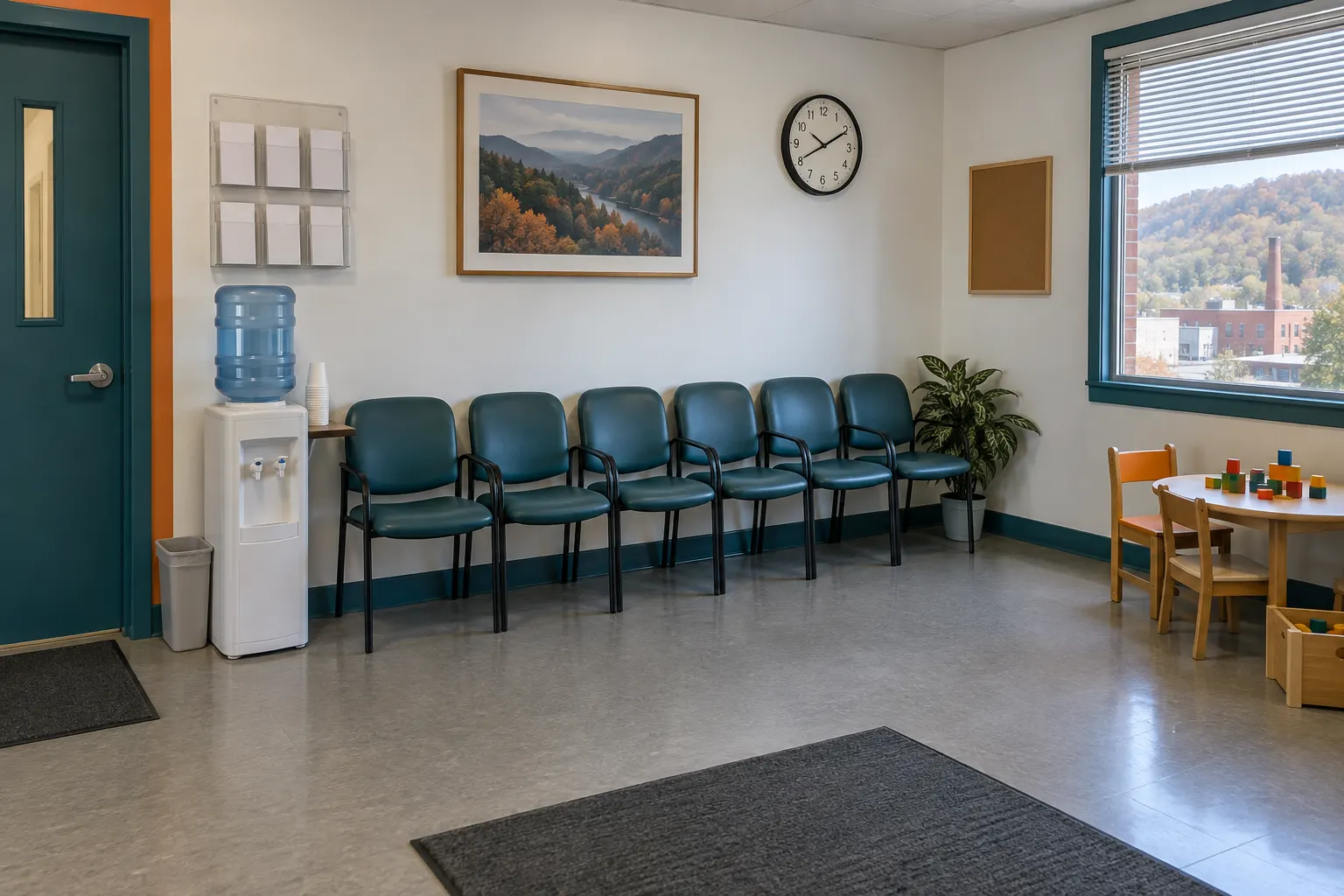
The desk checks you in and asks which language. The nurse takes your blood pressure, weight and the list of medications, and asks what brought you in. The clinician — a volunteer physician, nurse practitioner or physician assistant — sees you for about thirty minutes. The pharmacist fills what was prescribed from the medication room, or starts the patient-assistance paperwork. The navigator sees you last: labs, referrals, the next visit, a ride if you need one.
Spanish interpretation is in the building at every session, by a trained volunteer, so nobody has to bring a relative to translate.
Five minutes, in English or Spanish
Demonstration: this form sends nothing and stores nothing. On a real site it goes to the patient navigator and nobody else.
At the desk, or by phone
Come to any session and the desk takes the same five answers on paper. Or call 555-0180; if nobody answers, leave a number and the navigator calls back the next business day.
After you apply: a call within three business days, a first visit within three weeks. The call is where the navigator asks about insurance and Medicaid properly, in English or Spanish, and books the visit.
Why the form is short: a website form that asked what is wrong with you would carry health information without the protections a clinic record has. So the form asks only what eligibility needs, and a person asks the rest, in the room.
Three sessions a week
Closed: Thursday 26 November (Thanksgiving) · Thursday 24 December (Christmas Eve) · Thursday 31 December (New Year's Eve) · Thursday 14 January (Medication-room inventory).
214 Mill Street
The white-brick building beside the old mill, one block from the courthouse. Free parking behind the building and on the street; the ramp is on the left of the front steps. The number 2 bus stops at the corner of Mill and Third, a two-minute walk, until 9 pm on weekdays.
If you need a ride to a specialist appointment across the county, say so to the navigator; a volunteer driver takes the clinic van.
What was checked on this site, and what was not
- Type
- Atkinson Hyperlegible throughout, a typeface designed by the Braille Institute so that letters and numbers are easy to tell apart at a glance and by readers with low vision. Body text is 18 pixels, lines are 1.6 times the type size, and no line runs longer than about 68 characters.
- Colour
- Every pair of text and background colour on every page was checked by a script against WCAG 2 AA (4.5 to 1 for text, 3 to 1 for large text) before the site went up. Nothing is conveyed by colour alone: open and closed are words, not only a colour.
- Phones
- Every page was laid out at 390 pixels wide and checked for anything cut off. The steps stack, the calculator stays usable, the tables scroll if they must.
- Forms
- Every field has a label. Errors are listed at the top, the list takes focus, and each field says what is wrong under it. Nothing times out.
- Motion and sound
- None. No video plays by itself; there is no video.
- Not yet checked
- A full pass with a screen reader, and a full keyboard-only pass by a person, have not been done. The checks above were made by scripts and by looking; they are not a claim of legal compliance.
- Tell us
- If something on this site does not work for you, call 555-0180 or write to [email protected]. Say which page and what happened; we answer within one business day and fix what we can.
- In the building
- A ramp beside the front steps, a wide accessible toilet, exam rooms on one level. A volunteer Spanish interpreter at every session; for other languages, say so on the call and the navigator arranges a phone interpreter.